

The staff of the Equal Pay Office write:
"Why are you always talking about men's jobs and women's jobs? Isn't a job just a job?" asked a participant in a course on job analysis and job valuation.
The question comes up regularly and is completely understandable. On the surface, gender seems to be irrelevant in a society where responsibilities, duties, and demands on people at work are today comparable, regardless of gender.
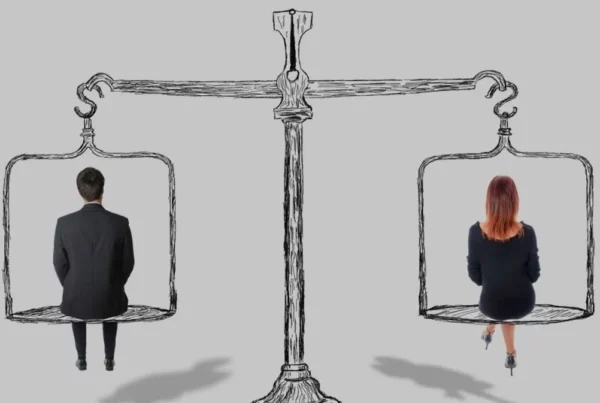
But despite great progress, we are not yet at a point where gender is irrelevant when it comes to wages. The gender pay gap, which disadvantages women, still exists, whether we look at earnings, unadjusted or adjusted wages. Research also shows that when women become the majority in a given profession, its value and therefore its wages decrease.
The gender pay gap is therefore not related to the individuals themselves or the nature of the jobs, but to the societal valuation of jobs by gender.
Society's value assessment
Statistics Iceland has pointed out that a gender-segregated labor market is the main cause of the gender pay gap, that men and women generally work in different jobs and industries, and that the jobs that women do are generally valued less.
In Iceland, however, we have long agreed on and legislated the principle that equal pay should be paid for work of equal value. But then the question arises: How do we know which jobs are of equal value? It may seem complicated, but it is possible.
Job evaluation involves analyzing the demands a job places on employees, such as knowledge, responsibility, stress, and work environment, and evaluating them using objective and objective criteria that have been developed with equality and diversity in mind. This allows jobs to be compared fairly and ensures that salaries reflect real value, not gender-based attitudes.
Such an assessment system has been used in this country for decades, including by municipalities, and the International Labor Organization has set out clear guidelines to support the implementation.
The fight continues
The Equal Pay Agency works daily to support employers in this work – through education, development of valuation systems and advice on job valuation in the interest of equal pay.
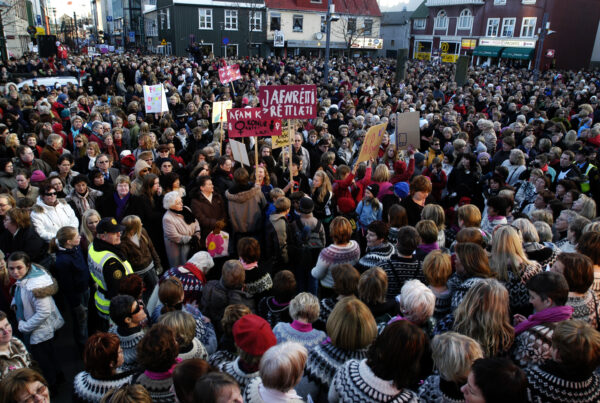
Today, fifty years after Women's Day, when women in Iceland walked off the job to demonstrate the importance of their work, it is important to highlight how the gender pay gap can be addressed.
At the Equal Pay Office, we try to highlight previously invisible factors and assess them. Because what is not measured, does not change. Job evaluation allows us to see the invisible, to evaluate jobs fairly and to ensure that wages are based on merit, not gender.
We at the Equal Pay Office will not give up until equal pay for work of equal value is no longer a matter of struggle but a self-evident fact.