
October 24, 2022
Sonja Ýr Þorbergsdóttir, chairwoman of BSRB, writes:
Happy birthday!
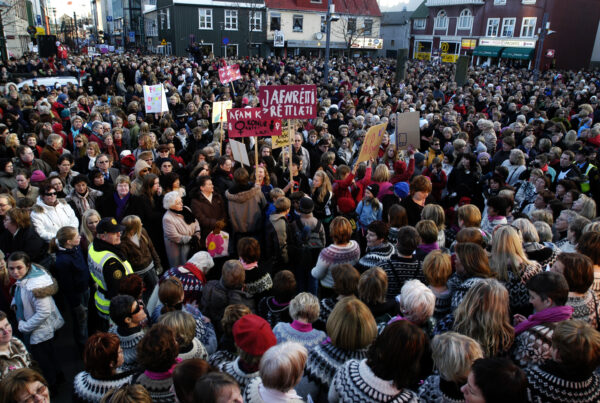
On this day 47 years ago, women walked off paid and unpaid work to demonstrate the importance of women's work. This strong women's solidarity has resulted in many important steps towards greater equality, but the position of the sexes is still unequal. Despite decades of struggle, significant social and technological changes, we still live in a society where women's contributions to society are in many ways invisible, unrecognized and undervalued.
The opposite sex?
Many people have wondered over the years how it is that we have not yet achieved gender equality. Efforts have been made to answer this question within most academic fields, including by challenging accepted theories or approaches. It should come as no surprise that the main task is often to highlight the gender bias that characterizes each discipline. Although women have flocked to study in recent decades, it was men who laid the foundation for most academic disciplines that are still based today. When academics (especially women) bring to the surface a conscious or unconscious bias towards women or their academic approach specifically addresses the status of women, it is often classified as a feminist approach. Examples of this are feminist philosophy, feminist economics, feminist finance, and so on.
It is a matter of reflection that to this day this label is needed for the sciences that aim to reach the (other) half of humanity. Similar to how it is generally stated specifically when discussing a women's national team in a certain sport, it is more common to talk about a national team without further definition when referring to a men's team. Or female chefs, female actors, female priests or female writers. However, we do not hear about a male chef, male actor, male priest or male writer.
It is undeniably reminiscent of the theory of the “other sex”, that men are universal and women are deviations that stand behind masculinity, as Simone de Beauvoir wrote about over 70 years ago. The writer Caroline Criado Perez recently pointed out that data and data collection, which are the basis of most decisions that affect our daily lives, rarely take gender into account in her book “Invisible Women”. Masculinity is seen as a given and femininity as an anomaly. Women pay for this, for example, with their time, money and often their health. There is practically no data collection when it comes to gendered people.
Who cooks your food?
Economics has a significant impact on government policy and decisions, on the labor market and on legislation. Economics is a social science, but the emphasis on mathematical arguments in the discipline leads to the approach often being compared to the physical sciences. This approach provides a false sense of security, since important and integral aspects of our society such as health, the environment and inequality are not part of classical economic models. In addition, paid and unpaid work that involves close and personal service to people such as care, nursing, education or social work only counts to a limited extent in measurements of economic growth. But these are precisely the jobs in which women are in the vast majority.
Thus, the author Katrine Marçal writes about how the so-called father of economics, Adam Smith, took no account of who cooked his food when he posed the fundamental question of economics in 1776 about how our food is produced. In other respects, he details the number of individuals such as farmers and meat workers, and the division of labor between them, that is needed for us to be able to afford to buy food every day. But he does not mention his mother, who lived with him all his life and has probably cooked all his meals. After all, Smith's theory of the free market was based on the assumption that people are motivated by self-interest and not by goodwill towards fellow citizens or a desire to contribute something good to society. It also assumed that individuals who, among other things, took care of the home, sick relatives, children and cooking had little or no value to contribute. These individuals were by far the most common women. Their work was unpaid and invisible in the definitions of societal values.
Although much has changed in economics in nearly 250 years, the situation is still such that many things that we consider important and indispensable in our society today are not considered valuable according to the traditional standards that are used and are commonly used as a basis for decision-making that shapes our lives. Then there is the fact that not everything that is considered important to us as a society can be measured, and what is measurable is not necessarily always what is most important. Based on this, economist Mariana Mazzucato has repeatedly pointed out the importance of governments setting a clear vision of the kind of society they want to promote, all their decisions taking into account that goal, and thus shaping the structure of society.
Women's collective bargaining agreements
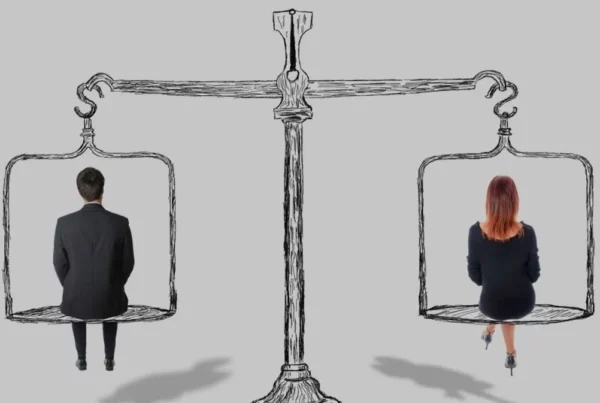
Today we know that one of the main explanations for the gender pay gap is the gendered nature of the labor market. This includes, among other things, that women and men perform different jobs in the labor market and that gender division between professions is prominent. Women make up the vast majority of employees in the public labor market, such as in health care, social services, and the education system. However, men's wages are always higher than women's regardless of whether they work in the private or public labor market. This has been known for a long time without any targeted action being taken. It is as if society takes it for granted that women maintain welfare at discounted rates. The old, outdated economic theories are still alive. This situation calls for a new social contract.
It is therefore welcome that the government announced, in connection with the conclusion of collective agreements between BSRB member unions and the state and local governments in March 2020, that a working group would be appointed, which has now submitted its proposals for actions to eliminate the pay gap resulting from the gender division of the labor market. The statement is important because the government recognizes the underestimation of the value of women's work and is proposing actions to correct this. There is currently an operational action group on equal pay, appointed by the Prime Minister, whose role is to build knowledge, experiment with new ways of valuing work, and create tools to correct the distorted value assessment of women's work.
But more is needed to change the entrenched culture that leads to systemic inequality. The reality of women and gender-based people needs to be as much a given in any research, scholarship, or decision-making as the reality of men. Their existence is not an aberration from the mainstream.
We can take a leap towards greater equality by uniting to make 2023 the Year of Women. It will be the year in which everyone joins hands and leaves no stone unturned to expose and stop inequality and gender-based violence in the workplace, in public finances, in education and training, through data and data collection, and in society as a whole and with targeted actions. It will be the year in which we conclude women's collective bargaining agreements to make discounted wages a thing of the past and we correct the undervaluation of women's work.