
September 30, 2021
Katrín Ólafsdóttir, PhD, associate professor at the Faculty of Business at RU, writes:
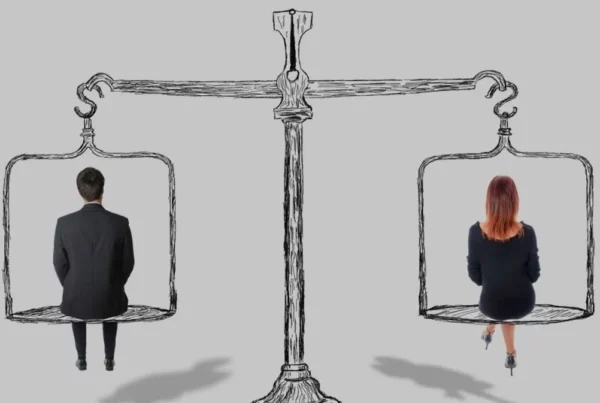
In 1961, the Althingi passed a law on equal pay for women and men. Women's wages were to be increased in stages to equal men's wages for the same jobs in general manual labor, factory work, and retail and office work, first with an increase of 1/6 of the wage difference and then annually until full wage equality was achieved in 1967. More than half a century later, wage equality has still not been achieved.
The gender pay gap has certainly been narrowing. From 2008-2019, the unadjusted pay gap fell from 20.5% to 13.9% and the adjusted pay gap went from 6.4% to 4.3%, according to Statistics Iceland's newly published wage survey. The target has therefore not yet been reached.
It was long believed that the cause of the gender pay gap was not least because women had less education than men. A study by Statistics Iceland shows that this reason is no longer valid. The biggest reason for the gender pay gap, as in other Nordic countries, is that women and men work in different industries and perform different jobs within them. In other words, the gender-based labor market is the main cause of the gender pay gap.
The gender-based labor market can be measured with the so-called DI index, where DI stands for Dissimilarity Index. The index measures how many women and how many men would need to change jobs in order for each job to have the same number of women as men. The index for Iceland in 2010 was 0.41, which means that 41% of those in the labor market would need to change jobs in order to achieve an equal ratio of men and women in all jobs. At the same time, the index was 0.44 in Denmark, 0.47 in Norway, 0.53 in Sweden and 0.60 in Finland, compared to an average of 0.49 in European countries.
A major step towards equal pay was taken when equal pay certification was introduced. Its main advantage is that employers are responsible for paying their employees according to what they actually contribute in their workplace. The main disadvantage of equal pay certification is that it does not include the factors that should be used as a basis for assessing the value of individual employees. It cannot therefore be ruled out that it includes factors that are not free from gender bias. At the same time, equal pay certification only applies to the same workplace. It is not assumed that different workplaces can be compared.
But from the above, it seems pretty clear that equal pay will be achieved late or never if nothing is done. Research in recent years has shown that one of the things holding back the development is unconscious bias. We unconsciously evaluate men and women differently even though the information we have in our hands gives us no reason to do so. We unconsciously consider men better than women, even though the information we have is exactly the same. We unconsciously consider women rude, but men handsome, even though the information is exactly the same. We do not do this because we are against equality, no, we do this unconsciously. This lies deep in our traditions, habits and culture.
To eliminate pay inequality, one must either eliminate unconscious bias or find ways to value jobs objectively. This is precisely the approach proposed in the report Valuing Women's Work, which contains the recommendations of the Prime Minister's Task Force on Revaluing the Value of Women's Work.
The report, which can be found on the Government Consultation Portal, proposes the establishment of a government action group on equal pay whose role, among other things, would be to analyse the problem by establishing a pilot project on assessing the value of work to identify which aspects characterise women's work and which may be undervalued. In parallel with this analysis, tools would be developed to assist employers in meeting the legal requirements for equal pay for work of equal value.
A negotiation process based on the New Zealand model for equal pay requirements will be developed. The negotiation process will be developed with the social partners and will consider the impact of changes in employment relationships and the outsourcing of work on the gender pay gap. Knowledge and awareness of the equal value approach of the equality law will also be increased through education and advice.
This is an important contribution towards eliminating the gender pay gap in the Icelandic labor market, and if the working group's recommendations are implemented, Iceland can once again sit at the forefront of countries that are at the forefront of gender equality issues.