
October 24, 2022
Elva Hrönn Hjartardóttir, a political scientist and union worker, writes:
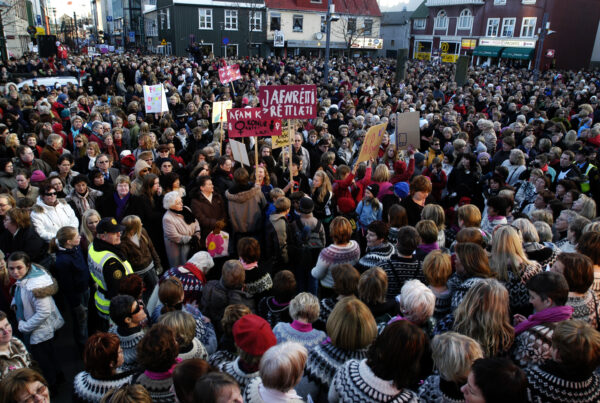
Today is International Women's Day and although the word itself sounds like a wonderful holiday for women with hot sun, white beaches and the associated toe pictures, the reality is not that. International Women's Day is a call for solidarity and change, a reminder that gender (wage) inequality in the labor market is prevalent and has long been allowed to thrive, especially in certain industries. International Women's Day was first celebrated on October 24, 1975, on the day the United Nations dedicated that year to women's issues. On that day, the vast majority of women walked off their jobs and large-scale protest meetings were held all over the country, and the participation was so great that the event attracted world attention. I myself was not born on that day, but I can only imagine the spirit of solidarity that has prevailed there. Since then, Women's Day has been celebrated five times, most recently in 2018, when I stood with my daughter and mother-in-law at Arnarhóll along with many people who came to demand equality in the labor market and society as a whole. Four years have passed, and gender-based inequality and violence, as well as an unexplained gender pay gap, still thrive in the Icelandic labor market.
Women in voluntary work in the labor market
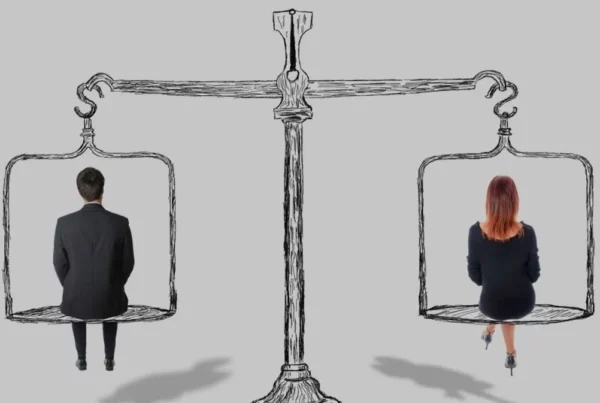
Ever since the women's movement stirred up society in the 1980s with its demands for increased rights for women and children, women's employment participation in Iceland has increased and is now among the highest among OECD countries, at around 87%.[1] Despite these important developments in the labor market and in equality issues, women have always faced great inequality in the workplace, especially in terms of wages and opportunities. According to the latest figures from Statistics Iceland on the gender pay gap, women have an average 21.9% lower average employment income compared to men's average employment income. This means that women working unpaid after 3:15 p.m. is considered a full working day from 9:00 a.m. to 5:00 p.m. There is no reason for this that can be explained, except for people's gender and the genders' choice of education and work.
The explained or adjusted pay gap is the difference in wages that is caused by, among other things, employment ratio, overtime, education and work experience. Throughout history, women have worked part-time jobs more than men and still do. This can be attributed, among other things, to the fact that women have mostly taken care of other jobs such as housework and caring for children and other family members. These jobs, which today are often called the third shift, are entirely unpaid and have not so far received the recognition they should receive and are not counted towards pensions. As a result, when it comes to older years, women have lower pension income than men. This also applies to women who have taken maternity leave during their working lives. The inequality continues after the end of their working lives.
The unexplained or unadjusted wage gap is what remains after the factors listed above have been taken into account and is called the rent gap. There is nothing that explains this wage gap – except, as mentioned before, gender. This conclusion can be reached by looking at certain sectors in the labor market. In sectors where women are the majority of employees, so-called traditional women's jobs , wages are generally lower than in sectors where men are the majority. However, there is a tradition that men who do traditional women's jobs receive higher wages than women in comparable jobs.
Tangible value beyond people's health and well-being
Traditional women's jobs have one thing in common: their value creation is rarely tangible, and they have so far been systematically undervalued. They involve a lot of stress, mental and physical strain, and many things that need to be kept in the air at the same time, which often leads to burnout. These jobs include, for example, teachers, healthcare workers (mainly nurses and paramedics) and other care workers, workers in the workforce, and shop workers. However, all of these are jobs that need to be done for our society to function. Traditional men's jobs thrive on wage increases, dividends, and bonuses, and they are characterized by the fact that they generate tangible value that is easy to measure in terms of money. These are mostly jobs in the technology and financial sectors, and in engineering and manufacturing industries. We also need these jobs in our society, but we must nevertheless value education, well-being, and the well-being of people equally, or even more, than money, or what?
Gender-based jobs and wages are a time warp that needs to be corrected
The gender pay gap is a real problem that has been allowed to thrive in the labor market since its inception. Our system, stereotypes, and a rich culture of wage secrecy in the workplace ensure that this is the case, but wage secrecy is still alive and well despite the fact that in 2008 people were legally allowed to disclose their pay if they choose to do so.[2] Fortunately, the system is not an uncontrollable mechanism with independent thinking. We are the system and we can change it for the better. However, this requires a change in mindset and a joint effort by the labor market, the government, and all of us. Let Women's Day inspire us to change and eliminate gender inequality in the labor market as well as outside it, and correct distorted values.