
October 24, 2022
Helga Björg O. Ragnarsdóttir, Executive Director of the Equal Pay Office, writes:
It has been almost 70 years since Iceland ratified the International Labour Organization's Equal Remuneration Convention in this country, thereby committing itself to ensuring equal pay for men and women for work of equal value. In 1961, equal pay was enacted in this country, and gender pay scales were abolished. The first general law on equality between men and women came into force in 1976, and women and men have enjoyed formal equality under the law since then.
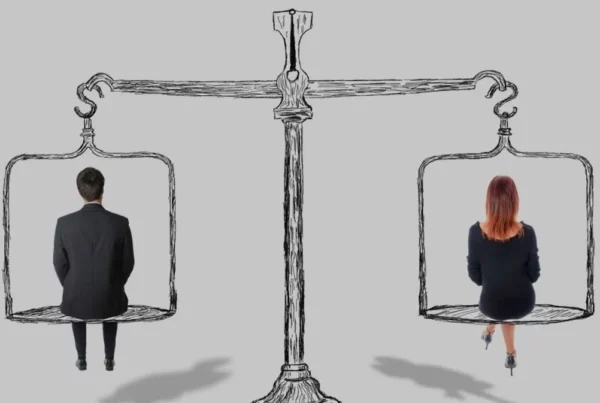
However, women still receive less than men for their contribution to the labor market. This is shown by Statistics Iceland's 2021 wage survey. According to it, the difference in employment income between men and women was 25.5%, the unadjusted gender pay gap was 13.9%, and the adjusted pay gap was 3.6% in 2019.
The gender pay gap is the easiest manifestation of gender inequality to measure, and there are therefore numerous studies and surveys that all more or less lean in one direction, namely; it is biased towards women. However, public discussion about the gender pay gap is far from reflecting the extent of the problem. It is as if we have become desensitized to information about the pay gap and do not always understand what the numbers really mean. The contradictory and confusing use of terminology in relation to the gender pay gap can mislead the discussion about pay equality. It is therefore worth the attempt to shed a little light on what the numbers presented here tell us.
In a very simplified way, it can be said that a comparison of the employment income of men and women shows us how much difference there is in the average wages of men and women, regardless of working hours, education, industry, etc. If working hours are taken into account, the so-called unadjusted wage gap is obtained, and by using even more variables such as education level, job and industry to explain the wage gap, we have the adjusted wage gap .
Example: A woman earns 700,000 ISK per month. A man earns 850,000 ISK per month. The difference in employment income is 150,000 ISK per month.
The man works more hours than the woman, which accounts for a difference of 30,000 krónur, and the unadjusted wage difference is therefore 120,000 krónur per month.
They are at the same educational level and otherwise comparable except that the man is in a traditionally male job in the financial sector and the woman is in a traditionally female job in social services. Her job has a base salary of ISK 90,000 lower. This leaves a difference of ISK 40,000 per month that cannot be explained and is therefore defined as an adjusted wage gap.
The result in this example is an 18% income gap, an unadjusted wage gap of 14%, and an adjusted wage gap of 5% in favor of the man.
In this artificial example, different jobs and professions explain a significant portion of the wage gap, but research shows that the gender wage gap can largely be attributed to the fact that the labor market in Iceland is gender-segregated. Men and women work in different industries and different jobs, where women's jobs are generally valued less than men's jobs.
In light of this, it is important to be aware that different approaches to the gender pay gap shed light on different aspects of it. To simplify somewhat, we can say that the earnings gap and the unadjusted pay gap shed light on the social and economic reality of the genders. The adjusted pay gap then sheds light on which factors other than working hours can explain the pay gap. Focusing on the adjusted gap ignores the gendered division of the labour market and the skewed valuation of jobs that discriminate against women and traditionally female jobs. Focusing on the unadjusted pay gap and the earnings gap shifts attention to the social structure in which women receive less than men for their paid work contribution due to a gendered labour market and the undervaluation of their work.
It is long overdue to eradicate wage inequality. To do this, we need to get to the root of the problem and review the value of jobs. This involves a thorough examination of the system and assumptions of wage setting, which analyzes which factors are considered when determining wages. Whether the main emphasis is on human resources and financial responsibility or whether responsibility for people's well-being is valued equally with financial responsibility, whether emotional stress is valued equally with physical stress, and so on. Wage setting should be based on professional criteria that cover all jobs with the goal of correcting the systematic undervaluation of women's work.
Pay inequality is not a statistical issue that we can take the time to dissect and discuss. Pay inequality is a social and economic reality for women that affects their quality of life and economic status throughout their lives and therefore needs to be eradicated immediately. For a woman with a salary of 700,000 krónur per month, a 14% pay gap means about 115,000 krónur per month, 1.4 million krónur per year and over 60 million krónur over a working life. Not to mention the impact on pension payments and the economic status of women in later life. It makes a difference!